Heat Tools for Human Hair Wigs: Flat Irons, Curling Wands and Safe Temperatures
Human hair wigs can be heat styled — but they can't repair heat damage. Which tools to use, temperature ranges by hair type, and the routine that keeps a wig soft for longer.
Bulqq is reader-supported: when you buy through a link on this page we may earn a commission, at no extra cost to you. It never changes what we recommend — the product rows here are pulled from live listings, newest first.
One of the main reasons to choose a human hair wig over synthetic is heat. You can straighten it, curl it, blow-dry it and change its style for the weekend, just like your own hair.
There's a catch, and it's worth understanding before you plug anything in. Your own hair grows. Damaged ends get cut off and replaced, and your scalp keeps feeding the hair natural oils. A wig gets none of that. Every bit of heat damage is permanent and cumulative. Use heat thoughtfully and a wig keeps its softness and shine for many months; use it carelessly and it can turn dry and frizzy within weeks.
This guide covers which tools are worth owning, the temperatures to use for different wig hair, and a routine that keeps damage to a minimum.
Why heat damages wig hair
Hair is protected by a layer of overlapping cells called the cuticle. Heat lifts and cracks that layer, and above a certain point it changes the protein structure inside the hair itself. The visible signs are:
- Hair that feels rough and straw-like.
- Ends that split or snap.
- Shine that turns dull.
- Wave or curl patterns that don't come back after washing.
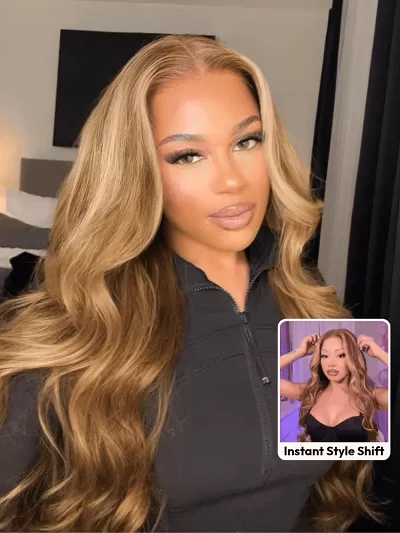
Coloured hair — blondes, highlights, 613, burgundy — is more vulnerable, because lightening has already opened the cuticle. That's why blonde wigs need gentler heat than natural black ones.
The tools worth owning
Flat iron (straightener)
The most used tool for wigs. Look for:
- Adjustable temperature with a clear display, not just "low/high". This matters more than anything else.
- Ceramic or tourmaline-coated plates, which spread heat evenly and reduce hot spots.
- Plate width to match the job: about one inch for most wigs; narrower for short bobs, bangs and hairlines.
Curling iron or wand
For adding curl or bend to straight and body wave wigs.
- 1–1.25 inch barrels give loose curls and waves on long wigs.
- Smaller barrels suit short wigs and tighter curls.
- A wand (no clamp) avoids the dent a clamp can leave; a clamp iron is easier for beginners.
Blow dryer with a cool setting
Useful for drying a wig faster and for smoothing. A concentrator nozzle directs the air for a sleek finish, and a diffuser dries curly textures without blowing out the pattern. A cool shot helps set a style.
Hot comb
A heated comb used close to the root, popular for smoothing kinky straight and yaki textures and for pressing a hairline. It's a precise tool — useful, but easy to overdo near the lace.
You'll find styling tools — irons, straighteners, hot combs and dryers — in our accessories category alongside caps and stands.
Temperature: start low, go up only if you need to
There's no single "right" temperature, because wig hair varies in thickness, processing and how it was coloured. The safe approach is to start low and increase in small steps until the hair styles in one or two passes — and then stop going up.
As a general guide:
- Blonde, 613, highlighted or otherwise lightened hair: start around 120–150°C (250–300°F). Lightened hair is fragile; stay at the low end.
- Fine or soft straight hair: around 150–170°C (300–340°F).
- Natural dark, unprocessed hair of normal thickness: around 170–190°C (340–375°F).
- Very thick, coarse or kinky straight textures: may need up to about 200°C (around 390°F) for the most resistant sections — but only those sections, and rarely.
Avoid running any wig hair at the very top of an iron's range. If a style won't take at a moderate temperature, the answer is usually smaller sections, not more heat.
The heat routine that protects a wig
1. Always start with clean, dry hair
Heat on dirty hair bakes product residue and oils onto the strands. Heat on wet hair is worse: the water inside the hair boils, which damages it from the inside. Never flat-iron damp hair. Use a blow dryer first, or let it air-dry fully.
2. Use a heat protectant every time
A heat protectant spray or serum puts a barrier on the hair and slows the heat reaching the cuticle. Spray it on, comb through, and let it dry before you apply heat. Look for one labelled as a thermal or heat protectant. Our hair care category has protectants, leave-ins and masks.
3. Put the wig on a stand
Styling a wig on your head means holding a hot tool close to your face and ears, and you can't see the back. Put it on a canvas block head clamped to a table, at a comfortable height. You'll get more even results and avoid burns.
4. Work in small sections
Clip the hair into sections and style one small section at a time — about an inch wide for straightening. Small sections need fewer passes, which means less total heat. One or two slow passes beat five fast ones.
5. Keep heat away from the lace and knots
The hairline is the most delicate part of a lace wig. Heat near the lace can loosen the knots, causing shedding, and can scorch HD lace. Style the hair at the front with the tool angled away from the lace, and never clamp an iron directly on it.
6. Let it cool before you brush or wear
Hair holds a style as it cools. Let curls cool fully — even pinned in place — before you touch them. Brushing hot hair undoes the style and invites more heat.

Heat by texture
Straight wigs
The easiest to heat style and the most forgiving. A flat iron at moderate heat smooths frizz after washing. For curls, a 1–1.25 inch wand gives soft waves that drop into a natural bend.
Body wave
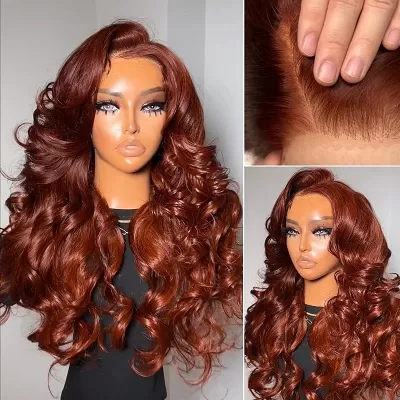
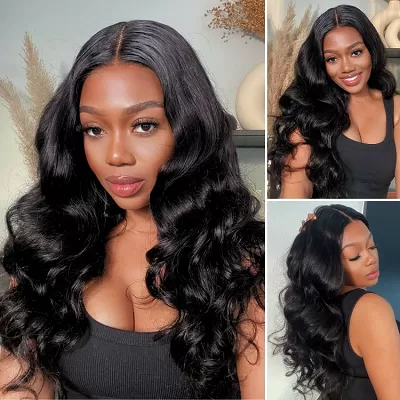
You can straighten body wave for a sleek look, and it usually returns to its wave after washing. To refresh the wave without washing, a large-barrel curling iron on a low setting recreates the S-pattern.
Deep wave, water wave and curly
Think hard before straightening. These patterns may not fully return after repeated straightening, especially with high heat. If you want versatility, a body wave or straight wig is a better buy. To refresh curls, use water and leave-in conditioner rather than a curling iron. Use a diffuser on a low heat to dry. See our guides to curly wigs and deep wave wigs.
Kinky straight and yaki
These textures are often styled with a blow dryer and round brush for a blowout look, or smoothed with a hot comb. Keep the temperature moderate; the coarser texture tempts people to turn the heat up.
Kinky curly
Best left to air-dry or diffused. Heat straightening tight coils is the quickest way to lose the pattern for good.
How often is too often?
There's no fixed number, but heat should be the exception rather than the routine. Good habits:
- Style for a few days at a time, not from scratch every morning.
- Use heatless methods — braid-outs, twist-outs, roller sets on damp hair, pin curls — on days off.
- Refresh rather than restyle: a single pass on the front sections often brings a style back.
- Deep condition every couple of weeks if you use heat regularly.
Signs you've overdone it
If the ends feel rough after washing and conditioning, or the hair has developed a frizzy halo that won't smooth, the wig has heat damage. You can't reverse it, but you can manage it:
- Trim the damaged ends (see our cutting guide).
- Use a moisturising mask and a leave-in conditioner after every wash.
- Turn the heat down and use it less.
Safety basics
Heat tools cause burns, mostly to fingers, ears and the neck.
- Use a heat-resistant glove on the hand that holds the hair.
- Rest hot tools on a heat-resistant mat, never on the wig or fabric.
- Unplug tools as soon as you finish, and never leave them on near a wig on a stand.
- Use tools that are designed for your country's voltage when travelling.
Heatless alternatives that actually work
Every heat-free day is a day of no damage. These methods create curls and waves without any hot tools:
- Braid-out — braid damp hair (with leave-in) in two to eight braids, let it dry completely, then unravel. Fewer braids give looser waves; more give tighter texture.
- Twist-out — the same idea with two-strand twists; softer, more defined spirals.
- Flexi-rods or perm rods — wrap damp sections, let dry, release. Great for defined curls on straight or body wave wigs.
- Satin heatless curling rods — wrap damp hair around a soft rod overnight for loose waves.
- Pin curls — coil small damp sections flat and pin; release when dry for vintage waves.
- Roller sets — large rollers on damp hair for big, bouncy volume.
The key to all of them: let the hair dry completely before releasing.
How to tell if a temperature is too high
Signs you've gone too hot:
- A sizzling or hissing sound — the hair may not be fully dry, or the heat is too high. Stop.
- A burning smell.
- Steam from dry hair.
- Hair that looks dull or feels rough immediately after styling.
- Ends that look frayed or "crispy".
If you notice any of these, turn the heat down by 10–20°C and work in smaller sections.
Tool maintenance
- Clean the plates of your flat iron regularly — product build-up creates hot spots and drags on hair. Wipe them when cool with a damp cloth.
- Check the cord for damage.
- Store tools coiled loosely, not tightly wrapped, to protect the cord.
- Replace tools with temperature controls that no longer hold steady.
Heat and lace: protecting the hairline
The hair at the hairline is the most delicate on a lace wig, and the lace itself can scorch:
- Style the front last, with the tool at its lowest effective setting.
- Angle the tool away from the lace.
- Use a heat-resistant comb to hold the front hair while you style, keeping the iron off the lace.
- For a sleek hairline, use a soft brush and edge product rather than heat.
A weekly heat budget
If you love heat styling, a simple rule of thumb helps: plan your heat for the week rather than reaching for the iron every morning.
- Full style once at the start of the week.
- Front-section touch-ups on a couple of days.
- Heatless refresh or protective style on the others.
That alone can dramatically extend the life of a wig you style often.
More heat questions
Is ceramic or titanium better for wigs?
Ceramic plates heat evenly and are gentler for most wig hair. Titanium heats quickly and runs hot — useful for very thick hair, but easy to overdo.
Can I use a hot air brush on a wig?
Yes — a hot air brush on a low setting with protectant is a gentle way to smooth and add volume.
How long should I hold a flat iron on a section?
A slow, steady single pass of a few seconds is better than holding the iron still, which concentrates heat in one spot.
The short version
Clean, completely dry hair. Heat protectant every time. Start at the low end, especially on blonde and coloured wigs. Small sections, few passes, and keep the tool away from the lace. Let it cool before you brush. And choose the wig for the look you'll actually wear most, so heat is for the occasional change — not for fighting its texture every day.
Need tools? Browse styling tools and accessories and hair care, or find a heat-friendly straight wig or body wave wig. Check today's codes before you buy.
Browse what this covers
Now you know what to look for
Put it to work. Answer five quick questions about the look you want and how you'll wear it, and we'll match you to one wig — with the reasons why, so you can judge it for yourself.
Find my match →Or see every wig compared by lace, density and price — and before you pay, today's wig coupon codes.