V-Part and U-Part Wigs: How to Blend Your Leave-Out Like a Pro
V-part and U-part wigs use your own hair as the hairline — no lace at all. Who they suit, how to match texture and colour, and a step-by-step for a seamless blend.
Bulqq is reader-supported: when you buy through a link on this page we may earn a commission, at no extra cost to you. It never changes what we recommend — the product rows here are pulled from live listings, newest first.
Every lace wig is trying to imitate one thing: a real hairline with hair growing out of a real scalp. V-part and U-part wigs take a different approach. Instead of imitating your hairline, they use it.
A small opening at the front of the cap lets a section of your own hair through. You blend that "leave-out" into the wig's hair, and the result is a hairline and parting that are genuinely yours — because they are. No lace to cut, no lace to lay, no adhesive, and nothing to match to your skin tone.
They're among the quickest and most beginner-friendly wigs you can buy, and on our comparison page, V-part and U-part wigs are one of the lower-priced constructions. But they come with one condition: the wig's texture has to match your own hair closely enough to blend. This guide covers how to get that right.
What V-part and U-part mean
Both have an opening at the top-front of the cap where your own hair comes through.
- U-part — a U-shaped opening, usually wider. You leave out a larger section of your own hair, which gives more flexibility for parting but means more of your own hair is styled each day.
- V-part — a smaller, V-shaped opening. You leave out a thin section along your natural part. Less of your own hair is exposed, so it needs less blending and is gentler on your hair.
The V-part is the more modern design, and for most people it's the easier of the two. Some V-part wigs are designed so the leave-out is almost minimal — a thin line of your own hair along the parting.
Why people love them
- No lace. Nothing to cut, lay, tint or worry about tearing.
- No adhesive. They stay on with combs and adjustable straps.
- Your own parting and hairline. Impossible to look more natural.
- Quick. Our comparison page puts typical fitting time at five to ten minutes.
- Breathable. No lace or glue across your forehead.
- Lower cost than most lace constructions.
The trade-offs
Your leave-out is exposed
The section of your own hair is styled and exposed to heat and weather every day you wear the wig. If you straighten it daily to match a straight wig, that's daily heat on your own hair. Choosing a wig that matches your hair's natural texture avoids this.
Texture matching matters
If your own hair is tightly coiled and the wig is silky straight, they won't blend without heat. That's why textures like kinky straight and kinky curly are so popular for V-part wigs.
Colour matching matters
Your leave-out needs to be close in colour to the wig. Natural black and dark brown blend most easily.
Parting is fixed
You part where your leave-out is. A V-part gives a set parting area; a U-part gives a bit more freedom.
Who V-part and U-part wigs suit
- First-time wig wearers who want the simplest possible start.
- People with enough hair at the front to leave out — fine or thinning hair at the front may not blend well.
- People who want a protective style with minimal fuss — see our guide to wigs as a protective style.
- People who dislike lace and glue.
- Anyone on a budget.
They're less suited to anyone with significant hair loss at the front, or who wants to wear a texture very different from their own hair every day.
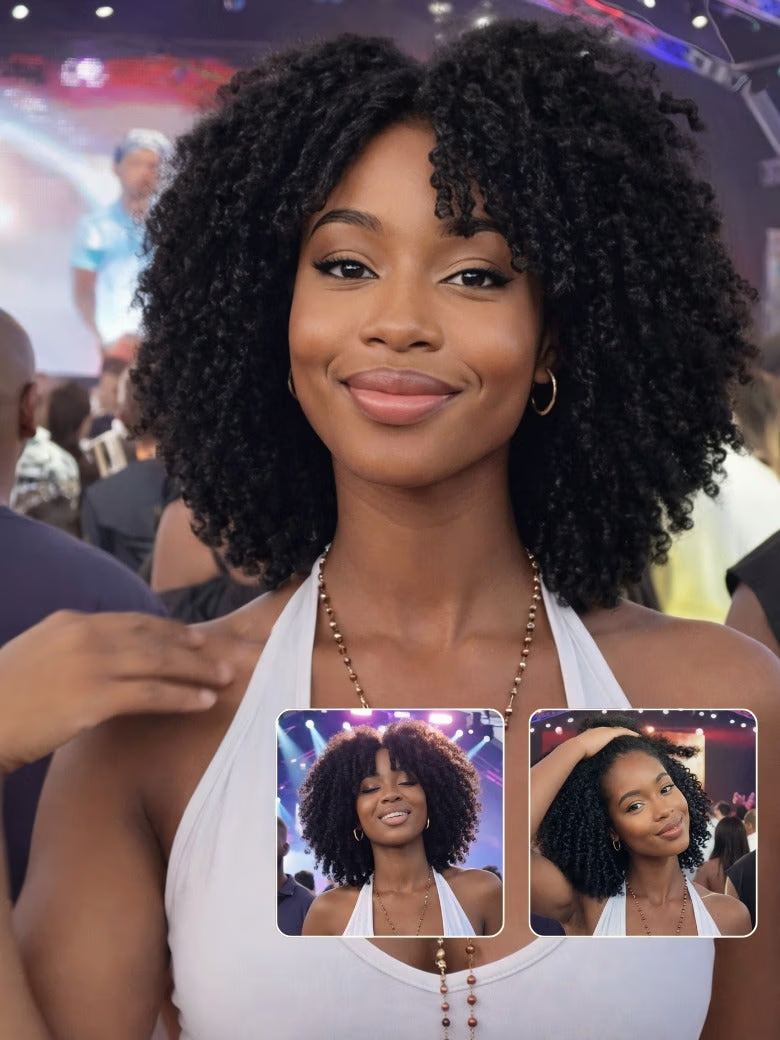
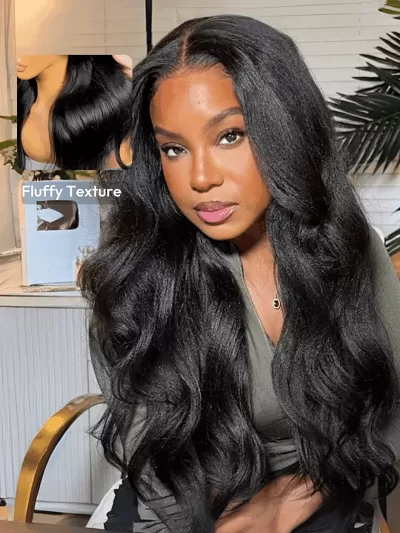
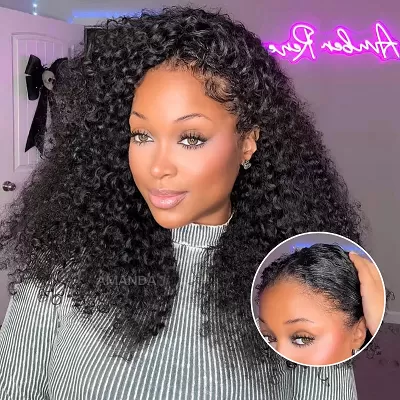
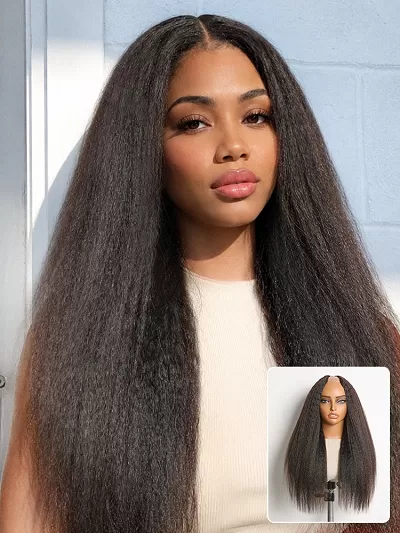
Matching texture: the most important decision
Choose the wig texture closest to your leave-out as you'll wear it:
- Relaxed or silk-pressed hair → straight or body wave.
- Natural hair blown out → kinky straight / yaki, which mimics blown-out natural hair.
- Natural hair in its curl pattern → kinky curly or curly.
- Wavy hair → body wave, loose wave or water wave.
If your hair is coily and you want a straight wig, you'll need to straighten your leave-out each time. A kinky straight wig is a good compromise — sleek, but with a texture that blends with blown-out natural hair.
Matching colour
- Most V-part wigs come in natural black (#1B) or dark brown, which match most natural hair.
- If your hair is coloured, choose the closest wig shade, or consider a wig with a slightly darker root.
- Don't dye your leave-out to match the wig if you can avoid it — that's chemical processing on your own hair. Choose the wig to match you instead.
How to wear a V-part wig: step by step
- Section your leave-out. Using a rat-tail comb, part a thin V or U section at the front along your natural part, matching the size of the wig's opening. Clip it out of the way.
- Braid or flatten the rest of your hair — cornrows straight back, or flat twists.
- Put the wig on, pulling your leave-out through the opening.
- Secure the combs and adjust the straps for a snug fit.
- Style your leave-out to match the wig. For a straight wig, a light blow-out or a pass of a flat iron at moderate heat with heat protectant. For a curly wig, define your curls with water and leave-in.
- Blend. Comb your leave-out into the wig's hair at the part, and brush gently to merge them.
- Finish with a light serum or edge product.
Blending tips
- Keep the leave-out small. Less of your own hair means less to blend and less exposure.
- Use a light hand with heat. Use the lowest temperature that works, always with a heat protectant. Our heat tools guide has temperature advice.
- Match shine. Human hair wigs can be shinier than natural hair; a light dry shampoo on the wig, or a little serum on your leave-out, evens it out.
- Wear a side part if it suits you — it hides the edge of the opening better than a middle part.
Protecting your own hair under a V-part
- Don't wear it too tight. Tension at the hairline causes traction damage. See protecting your own hairline.
- Take it off at night and let your hair breathe.
- Moisturise your leave-out daily.
- Give your hair breaks between wearing periods.
- Rotate heat-free days if you're straightening your leave-out.
Styling ideas
- Sleek side part with straight or kinky straight hair.
- Big curly fro with a kinky curly V-part.
- Half-up puff.
- Bangs on a U-part wig, covering the leave-out entirely.
Which retailers to look at
By our comparison page's "Strongest on" measure, UNice's range leans toward no-lace styles more than any other retailer here, which includes V-part and U-part wigs. Browse the UNice brand page and check UNice codes. Other retailers sell V-part and U-part wigs too; the V-part wigs page brings them all together.
V-part and U-part questions
Is a V-part better than a U-part?
For most people, yes — it leaves out less of your own hair, so it needs less blending and protects more of your hair. A U-part gives more parting flexibility.
Can I wear a V-part with short hair?
You need enough hair at the front to cover the opening and blend. Very short hair may not work.
Do V-part wigs look natural?
They can look more natural than any lace wig at the hairline, because it's your own hair. The blend at the part is what decides it.
Are V-part wigs glueless?
Yes. They're held with combs and straps.
Can I wear a V-part wig every day?
Yes — just protect your leave-out from daily heat and give your hair regular breaks.
Reading a V-part listing: a worked example
"Kinky Straight V Part Wig Glueless Upgrade U Part No Leave Out 180% Density 20 Inch Natural Black"
- Kinky Straight — blends with blown-out natural hair.
- V Part — a small V-shaped opening for your leave-out.
- Upgrade U Part — some listings combine terms; check the photos to see the opening size.
- No Leave Out — some newer designs include a thin strip of lace or hair at the opening so you leave out very little or none. Read the description to see exactly what the design expects.
- Glueless — combs and straps.
- 180% Density, 20 Inch — full and mid-to-long.
- Natural Black — the easiest colour to match.
Sizing your leave-out
The less hair you leave out, the less you need to blend and the more of your hair is protected.
- V-part — a thin section along your natural part, roughly matching the V-shaped opening.
- U-part — a wider U-shaped section, typically one to two inches wide.
Use a rat-tail comb to section cleanly, and match the size of the wig's opening. A leave-out that's larger than the opening is harder to blend and exposes more of your hair.
Blending with less heat
If your leave-out needs stretching to match the wig:
- Use the lowest heat that works, always with a heat protectant.
- Blow-dry on low with a comb attachment instead of flat-ironing if possible.
- Stretch with heatless methods — banding or braiding damp hair overnight.
- Match the texture so you need less manipulation at all.
Colour matching
If the wig's colour doesn't match your leave-out exactly:
- Choose a wig a shade darker rather than lighter — darker hair blends more easily.
- Use a temporary colour product on your leave-out (a root touch-up spray or powder), which washes out — rather than permanent dye.
- Pick a highlighted wig if your hair has natural lightness.
V-part wigs and hair health
Because your leave-out is exposed and styled daily:
- Moisturise it every day you wear the wig.
- Keep heat to a minimum.
- Take the wig off at night and protect your leave-out with satin.
- Take breaks from wearing a V-part to let your leave-out rest — switch to a headband or closure wig for a while.
See wigs as a protective style.
Common V-part mistakes
- Leaving out too much hair.
- A texture mismatch that forces daily straightening.
- Flat-ironing the leave-out at high heat.
- Ignoring the edges of the opening — comb the leave-out over them to hide the transition.
- Wearing it too tight.
More V-part questions
Can I wear a V-part wig with relaxed hair?
Yes — choose a straight or yaki texture to match.
Do V-part wigs come with bangs?
Some U-part styles include bangs, which cover the leave-out.
How long does a V-part take to put on?
Five to ten minutes once you've practised, including blending.
The short version
V-part and U-part wigs use your own hairline instead of lace, so there's nothing to cut, lay or glue, and they go on in minutes. The secret is matching the wig's texture and colour to your own leave-out, so you can blend without heavy heat. A V-part leaves out less hair and is gentler; a U-part gives more parting freedom.
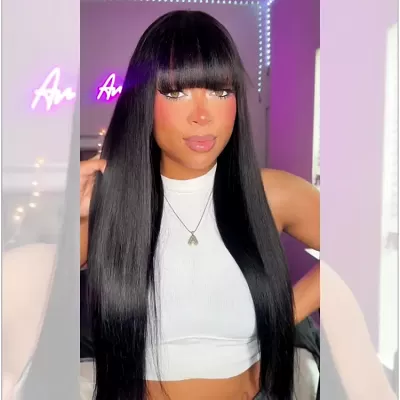
Browse every V-part and U-part wig, compare no-lace options in our half, headband, U-part and V-part comparison, and check today's codes before you buy.
Browse what this covers
Now you know what to look for
Put it to work. Answer five quick questions about the look you want and how you'll wear it, and we'll match you to one wig — with the reasons why, so you can judge it for yourself.
Find my match →Or see every wig compared by lace, density and price — and before you pay, today's wig coupon codes.