High Density Wigs (200%–250%): Big Volume, and What It Costs You
200%, 250% and higher-density wigs deliver show-stopping volume — with more weight, more heat and more upkeep. Who they suit, how to wear them comfortably, and when 180% is enough.
Bulqq is reader-supported: when you buy through a link on this page we may earn a commission, at no extra cost to you. It never changes what we recommend — the product rows here are pulled from live listings, newest first.
Some wigs are meant to look like hair. High density wigs are meant to look like hair — big, bouncy, full-to-the-ends, red-carpet hair. At 200%, 250% and above, they carry far more hair than grows from most people's heads, and that's the point.
They're a favourite for events, photoshoots, content, nights out and anyone who loves maximum volume. They also come with trade-offs that listings rarely spell out: more weight on your head, more warmth, more hair to detangle, and usually a higher price.
This guide explains what high density really means, who it suits, how to wear it comfortably, and how to decide whether you actually need 250% or whether 180% would give you what you want.
What density means
Density describes how much hair is on the cap, as a percentage. The numbers are relative rather than absolute, and they aren't standardised between manufacturers, so one retailer's 200% may look different from another's. As a rough guide:
- 130–150% — light to medium. Closest to most people's natural hair.
- 180% — medium-full. The most common density sold — on our comparison page, more wigs are listed at 180% than any other density.
- 200% — full. Noticeably voluminous.
- 250% — very full. Big, glamorous volume.
- 300% and up — extreme volume, usually for very long lengths or deliberate statement looks.
Our density guide shows what each looks like.
What high density gives you
- Volume from root to tip — no thin ends on long lengths.
- Fullness on very long wigs — at 26 inches and beyond, extra density keeps the ends looking thick.
- Big, bouncy curls and waves.
- A camera-ready, glam look that photographs full from every angle.
- Better coverage of the cap and wefts, even when parted or styled.
The trade-offs
Weight
More hair is heavier. A long 250% wig can feel noticeably heavier than a 150% one, especially by the end of a long day. That weight pulls on the cap and, through it, on your own hairline.
Heat
More hair traps more heat. High density wigs are warmer to wear — worth considering in summer. See wearing a wig in hot weather.
Upkeep
More hair means more to detangle, longer to wash, and much longer to dry.
Price
Density is one of the main drivers of price, after length. A 250% wig typically costs more than the same wig at 180%.
A less natural look
Very high density doesn't look like most people's own hair. If you want to pass as natural, 150–180% is more convincing.
Who should choose high density
- You want a glam, voluminous look as your signature style.
- You're buying a very long wig (26 inches plus) and want full ends. See 30-inch and longer wigs.
- You're dressing for an event, a shoot or a performance.
- You love big curls or waves.
- Your own hair is naturally very thick and a lighter density would look thin by comparison.
Who should probably stay at 150–180%
- You want the most natural look.
- It's your first wig.
- You'll wear it all day, every day.
- You're sensitive to weight or tension at your hairline.
- You live somewhere hot.
- You're wearing a short wig or bob — high density on short hair can look bulky.
How construction and texture change the look
- Straight hair looks heaviest at high density — 250% straight can look helmet-like. 180–200% is often enough.
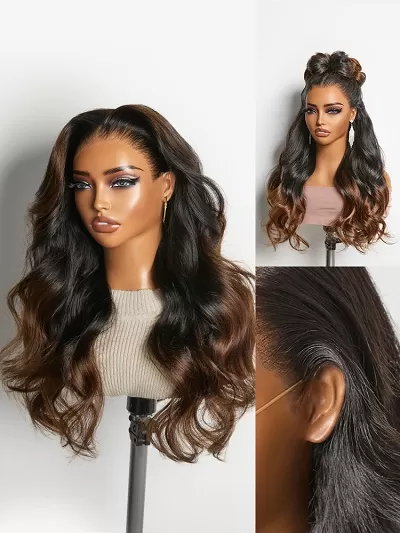
- Body wave and loose wave carry density beautifully — volume with movement.
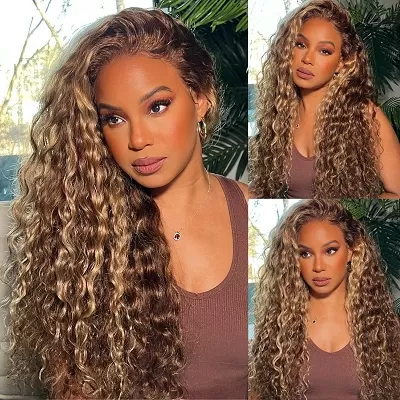
- Deep wave, water wave and curly look enormous at high density; even 180% looks very full.
- Kinky curly looks fuller than straight at any density, so 150–180% often gives plenty of volume.
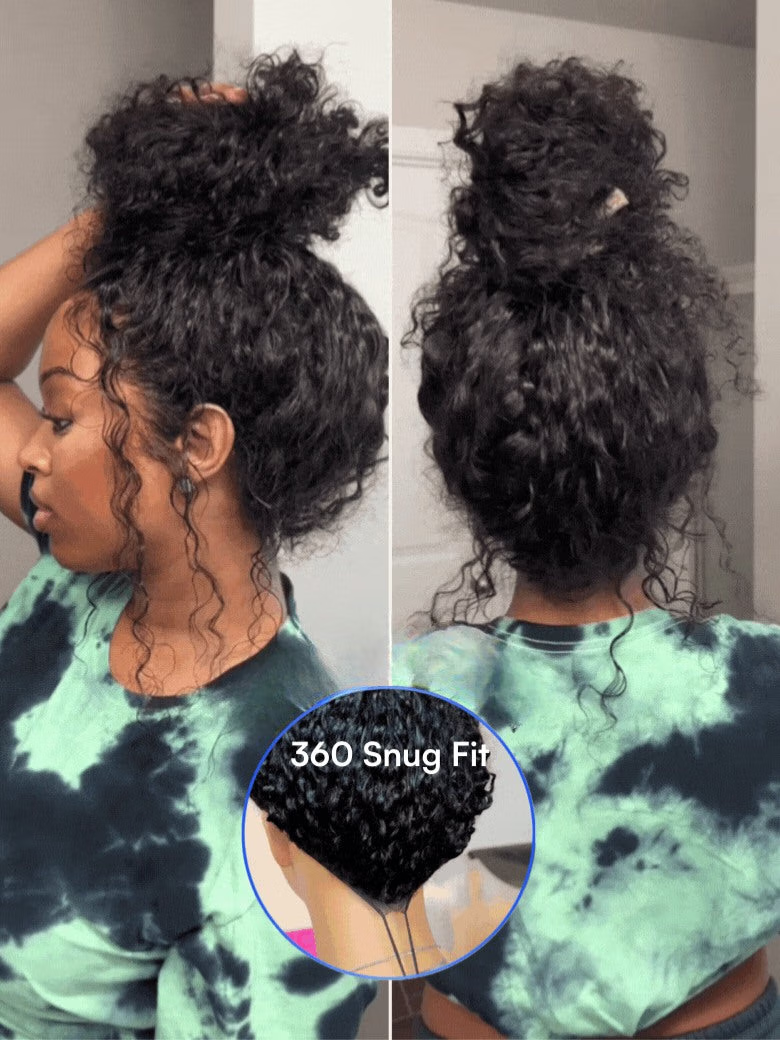
- Lace fronts and 360s — high density units often use 13x6 lace fronts or 360 lace for a glam, flexible hairline.
Wearing a high density wig comfortably
- Get the cap size right. A cap that's too big shifts under the weight; too small pinches. Measure your head.
- Use a grip band to spread the weight and protect your edges. See wig caps, grip bands and melt bands.
- Don't over-tighten the straps to compensate for the weight.
- Take breaks — remove it when you get home.
- Thin the face area if it feels bulky — see cutting a wig at home.
- Choose a breathable cap.
Caring for high density hair
- Detangle in sections, always from the ends up. Four to eight sections is normal.
- Wash in sections, smoothing shampoo down rather than scrubbing.
- Condition generously — there's a lot of hair to cover.
- Dry thoroughly. High density takes much longer to air-dry; a damp cap can smell musty. Use a cool blow dryer at the cap, then let the lengths air-dry.
- Store it on a stand, not folded.
See our washing guide and daily care guide.
Styling high density
- Big bouncy blowout — round brush and blow dryer.
- Voluminous side part — the classic glam look.
- Big curls — a 1.25-inch curling iron on a straight or body wave unit.
- Half-up — reduces bulk around the face.
- High ponytail — on a 360 unit, for a dramatic look.
- Hollywood waves — sculpted and glamorous.
Which retailers to look at
By the "Strongest on" measure on our comparison page, Amanda Hair's range leans toward heavy densities — along with 360 and full-lace caps — more than any other retailer here. That means more high density options to choose from, not a quality judgement. Browse the Amanda Hair brand page and check Amanda's codes, or see every retailer on the high density wigs page.
High density questions
Is 250% too much?
For everyday natural wear, often yes. For glam and events, it's exactly right.
Do high density wigs shed more?
Not necessarily, but there's more hair to lose, so you may notice more strands in your comb.
Does high density last longer?
Not inherently. It still needs the same care.
Is 200% a good compromise?
Yes — 200% gives visible volume without the full weight of 250%.
Can I thin a high density wig?
Yes, carefully, with thinning shears from mid-length to the ends — never at the root.
Reading a high density listing: a worked example
"250% Density Body Wave 13x6 HD Lace Front Wig 26 Inch Glueless Pre-Plucked"
- 250% Density — very full, glamorous volume.
- Body Wave — carries high density beautifully, with movement rather than bulk.
- 13x6 HD Lace Front — ear-to-ear lace with six inches of parting depth. See our 13x6 guide.
- 26 Inch — long; high density keeps the ends full.
- Glueless — important for comfort at this weight.
- Pre-Plucked — a softened hairline, which matters more at high density because the front can look heavy.
Density by length: a rough guide
The longer the wig, the more density it needs to look full to the ends:
- 8–14 inches (bobs and short wigs): 130–180%. Higher looks bulky.
- 16–20 inches: 150–180% natural, 200% full.
- 22–26 inches: 180–200% natural-full, 250% glam.
- 28 inches and up: 200–250% keeps the ends from looking thin.
These are guidelines, not rules — and because density isn't standardised, compare within a retailer.
Density by texture
The same density looks different on different textures:
- Straight — looks the least voluminous at any density, but very high density can look heavy and flat-sided.
- Body wave — looks fuller than straight; carries high density well.
- Deep wave and water wave — look much fuller; 180% often looks like 200%+ on straight hair.
- Curly and kinky curly — the fullest-looking at any density.
So a 180% kinky curly wig may give you as much volume as a 250% straight one.
High density without the weight
If you want volume but worry about weight:
- Choose a wavy or curly texture — it looks fuller at a lower density.
- Choose a shorter length — volume without as much hair.
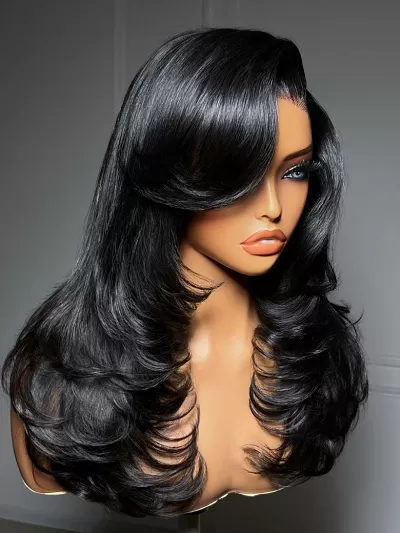
- Ask for a layered cut — layers create volume and remove weight. See cutting a wig at home.
- Use a round brush blowout — lifts the roots for a fuller look at moderate density.
Washing and drying high density hair
High density wigs take much longer to wash and dry. A routine that helps:
- Detangle thoroughly before washing, in at least six sections.
- Wash section by section, keeping each loosely twisted.
- Condition generously — it takes more product than you think.
- Squeeze out excess water with a microfibre towel.
- Dry the cap first with a cool blow dryer, then let the lengths air-dry on a stand.
- Check the cap is completely dry before wearing or storing.
Common high density mistakes
- Choosing 250% for a first wig. Heavy and harder to manage.
- High density on a short bob. Looks round and bulky.
- Not drying the cap fully. Musty smell.
- Tightening straps to cope with the weight. Use a grip band instead.
- Brushing it all at once. Work in sections.
More high density questions
Is 180% considered high density?
It's medium-full — the most common density sold. "High density" usually means 200% and above.
Do high density wigs look fake?
They look full and glamorous rather than natural. That's often the point. For a natural look, 150–180% is better.
Do high density wigs cost more?
Usually, because they use more hair. Compare the same wig at different densities on the retailer's page.
Your density decision guide
- What look do you want? Natural: 150–180%. Full: 200%. Glam: 250%+.
- How long is the wig? Under 16 inches: stay at 180% or below. Over 26 inches: 200% or more keeps the ends full.
- What texture? Curly and wavy textures look fuller at lower densities; straight needs more to look voluminous.
- How long will you wear it each day? All day, every day: lighter is more comfortable. Events: go as full as you like.
- What's the weather? Hot and humid: lighter is cooler.
If two answers point different ways, choose the lighter option — you can always add volume with styling, but you can't make a heavy wig lighter.
High density at a glance
- Best everyday "full" choice: 200% body wave, 20–22 inches, glueless.
- Best glam choice: 250% body wave or straight, 24–28 inches, 13x6 or 360.
- Best natural choice: 150–180%, any texture.
The short version
High density wigs (200%+) give you maximum, camera-ready volume, especially on long and wavy styles. They're heavier, warmer, more work to care for and usually more expensive. Choose them for glam and long lengths; stay at 150–180% for natural, everyday wear. Get the fit right and use a grip band to wear them comfortably.
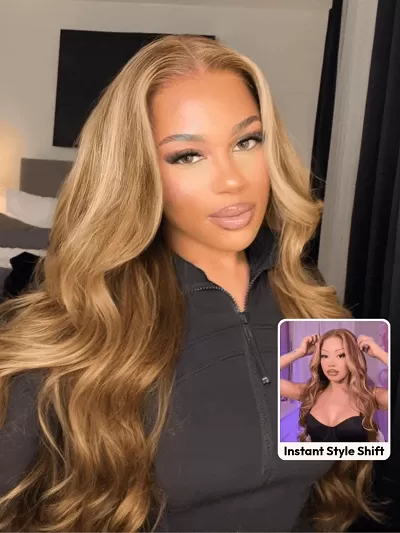
Browse every high density wig, compare densities on our comparison page, and check today's coupon codes before you buy.
Browse what this covers
Now you know what to look for. Find yours in a minute.
Answer five quick questions about the look you want and how you'll wear it, and we'll match you to one wig, with the reasons why and the best code to take off it.
Find my match →Or go straight to the 542 high density wigs.
Or see every wig compared by lace, density and price — and before you pay, today's wig coupon codes.